
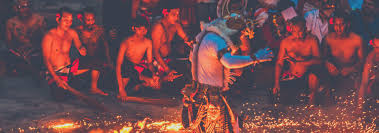
Welcome to Introduction to Anthropology, where we will delve into the multifaceted world of humans. Anthropology is a holistic science covering four generalized fields, including Biological Anthropology, Cultural Anthropology, Archaeology, and Anthropological Linguistics. There are several subfields for each. During this class we will not be able to cover each of these subfields in detail, but we will touch on the basic attributes of as many as possible. By the end of this semester you should be able to discuss, in detail, each of the four fields and several subfields of each.
If you are ill, I hope that you will stay at home and notify me of the situation asap, via text message (864-580-1881). However, please remember that if you are not in class, you are still responsible for everything that is said during the lecture and for the material in the PowerPoint presentation from that day. You should also always arrange to copy lecture notes from a classmate if you are absent. Please see the section in this addendum regarding make up tests.
Furthermore, if you are absent: All PowerPoint presentations for this course will be available to you online, as well as links to videos and scholarly articles relating to the topics we cover.
There will be 4 tests during this course, a cumulative midterm, and a cumulative final exam. Each of the four tests will include questions derived from your readings, your lecture notes, and films/ videos that may be assigned during the semester. The midterm and final exams will include questions taken verbatim from the prior exams, as well as others which are new but cover topics from their respective sections of the class. If you score 90% or above on all of the 4 major tests and the midterm, before any extra credit is added, you may exempt your final exam.
Makeup opportunities for the all tests will be determined on case-by-case basis. There will be no make-up for the midterm or final exam. All documentation validating your reason for missing a major test must be submitted for you to be allowed a makeup test. This means doctors excuses, jury duty letters, etc., must be submitted. Please note: A phone call or a note from your mom will not get you an opportunity to make up a test. I trust that you are all responsible adults, and I will treat you as such as long as you act as such. Thank you in advance.
The final exam will only be administered on the scheduled day during exam week. No final exam make-ups allowed! If you need to take the final early due to travel times, etc., that may be arranged.
Breakdown of Grading System:
Tests = 50% (12.5% each)
Class Participation = 10%
Midterm Exam = 20%
Final Exam = 20%
Any student found to have plagiarized their sources or another student’s work will receive a grade of zero for the assignment and will be referred to the dean for recommended disciplinary action according to the policies of this institution. The college’s policy on plagiarism and cheating can be found in your student handbooks.
There is a chain of command in this class. If you have an issue with me or any part of this class, you must come to my office to discuss it and we will try to reach an agreement, but as your professor I will have the final say as to what transpires inside my classroom. If we are unable to reach an accord on our own, you must contact the Social Sciences Department Chair: Dr. Rhiannon Leebrick. Please see below for her contact information. The final decision will be hers.
So, to reiterate:
1. Talk to me privately (grandstanding in front of the class will be viewed as a disruption and you will be invited to leave class. No Exceptions)
2. If not resolved, talk with Dr. Leebrick
3. If still not resolved, talk to the dean.
This chain of command must be followed to resolve any issues.
I don’t anticipate this being an issue here, but if for any reason you are dismissed from any class due to disruption or other infraction impeding the progress of the class, you will not be readmitted to the class until you have met with the Social Sciences Department Chair, Dr. Leebrick leebrickra@wofford.edu. She will notify me after you have spoken with her regarding the matter. You may then return to class if she deems it appropriate.
All I ask of you is that you come to class, keep up with the assignments, prepare well for tests, and participate in class discussions. If you do these things the likelihood is that you will do very well in the class. If you have any questions please do not hesitate to contact me or come by my office. My contact information is below and I will be glad to help you.
Ed Johnson
Email: johnsonem@wofford.edu
Office: Daniel 221
Mobile: 864-580-1881
|
Week |
Chapter |
Topic |
Weekly Assignment |
|
|
|
|
|
|
Week 1: 2/3 |
Chapter 1 |
What Is Anthropology? |
Read Pp. 7 - 35 |
|
2/5 |
Chapter 2 |
Methods: Cultural and Archaeological |
Read Pp. 39 - 65 |
|
|
|
|
|
|
Week 2: 2/10 |
Chapter 3 |
Culture Concept: Theories of Cultural Change |
Read Pp. 67 - 95 |
|
2/12 |
Chapter 4 |
Biological Evolution and Early Human Evidence |
Read Pp. 97 - 139 |
|
|
|
|
|
|
Week 3: 2/17 |
Chapter 5 |
The Genus Homo and the Emergence of Us |
Read Pp. 141 - 175 |
|
2/19 |
|
Test 1 on Chapter's 1-5 |
|
|
|
|
|
|
|
Week 4: 2/24 |
Chapter 6 |
Language and Communication |
Read Pp. 179 - 206 |
|
2/26 |
Chapter 7 |
Work Life and Value: Economic Anthropology |
Read Pp. 211 - 247 |
|
|
|
|
|
|
Week 5: 3/3 |
Chapter 8 |
Authority, Decisions, and Power: Political Anthropology |
Read Pp. 251 - 277 |
|
3/5 |
Chapter 9 |
Social Inequalities |
Read Pp. 281 - 305 |
|
|
|
|
|
|
Week 6: 3/10 |
Chapter 10 |
The Global Impact of Human Migration |
Read Pp. 311 - 335 |
|
3/12 |
|
Test 2 on Chapter's 6-10 on 3/12 |
|
|
|
|
|
|
|
Week 7: 3/17 |
Chapter 11 |
Forming Family Through Kinship |
Read Pp. 339 - 363 |
|
3/19 |
Chapter 12 |
Gender and Sexuality |
Read Pp. 367 - 396 |
|
|
|
|
|
|
Week 8: 3/24-3/26 |
|
Spring Break |
|
|
|
|
|
|
|
Week 9: 3/31 |
Chapter 13 |
Religion and Culture |
Read Pp. 399 - 428 |
|
4/2 |
Chapter 14 |
Anthropology of Food |
Read Pp. 431 - 453 |
|
|
|
|
|
|
Week 10: 4/7 |
Chapter 15 |
Anthropology of Media |
Read Pp. 457 - 481 |
|
4/9 |
|
Test 3 on Chapter's 11-15 |
|
|
|
|
|
|
|
Week 11: 4/14 |
Chapter 16 |
Art, Music, and Sport |
Read Pp. 485 - 511 |
|
4/16 |
Chapter 17 |
Medical Anthropology |
Read Pp. 551 - 541 |
|
|
|
|
|
|
Week 12: 4/21 |
Chapter 18 |
Human-Animal Relationship |
Read Pp. 545 - 570 |
|
4/23 |
Chapter 19 |
Indigenous Anthropology |
Read Pp. 573 - 605 |
|
|
|
|
|
|
Week 13: 4/28 |
Chapter 20 |
Anthropology on the Ground |
Read Pp. 609 - 624 |
|
4/30 |
|
Test 4 on Chapter's 16-20 |
|
|
|
|
|
|
|
Week 14: 5/5 |
|
Final Exam Review |
|
|
5/7 |
|
Cumulative Final Exam |
- Teacher: Edward Johnson